Before there is a start line, a crew list, or a race route, there is the boat.
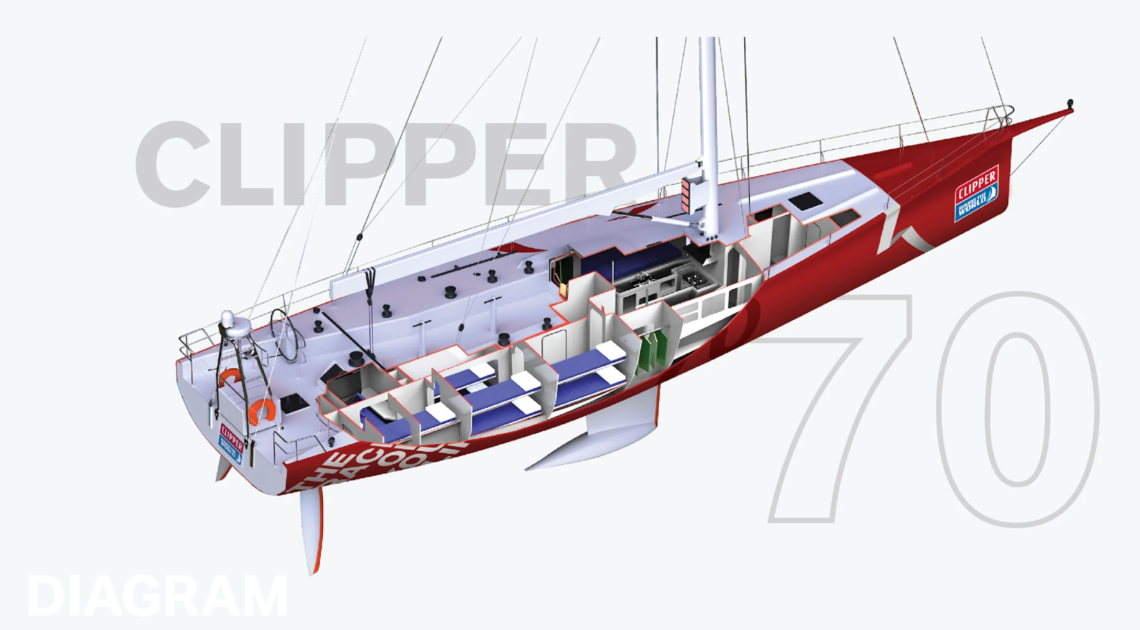
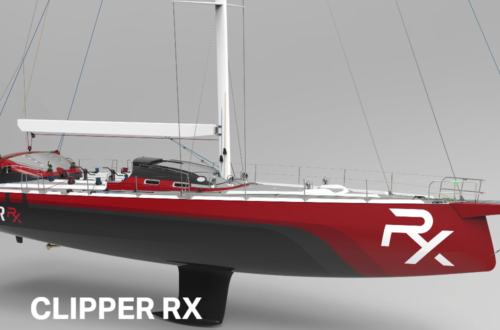
The Clipper Round the World Yacht Race is built around a single yacht design created for one purpose: to safely take everyday people offshore and across some of the most demanding waters on Earth. That boat is called the Clipper 70.
She is not a luxury yacht and she is not a casual weekend sailboat. She is a purpose-built offshore racing yacht designed to carry amateur sailors through real ocean conditions. For Leg 7, she will be home, classroom, workplace, and challenge all at once.
This post is a simple introduction to the Clipper 70, what makes her different, and why she matters so much to this race.
A One-Design Offshore Racing Yacht
The Clipper 70 is what’s known as a one-design offshore racing yacht.
That means every boat in the Clipper fleet is built the same way. The hull, mast, sails, and core systems are standardized across all Clipper 70s. No team gets a faster boat, lighter materials, or custom upgrades.
This is very intentional.
Because everyone sails the same boat, the race is not about equipment. It is about people. Success comes from teamwork, communication, preparation, and decision-making rather than technology or budget.
The Clipper 70 herself is designed to be strong, durable, and forgiving enough to carry amateur sailors safely offshore. At the same time, she demands care, coordination, and respect. She rewards crews who sail thoughtfully and work well together.
This one-design approach is one of the reasons the Clipper Race is accessible to non-professional sailors. You do not need to own a yacht or come from an elite racing background. You need commitment, training, and the willingness to learn as part of a team.
Built for Long-Distance Ocean Sailing
The Clipper 70 is designed specifically for long-distance ocean racing.
She is large and solid, built to withstand weeks at sea, repeated race legs, and constantly changing conditions. Ocean sailing is very different from sailing close to shore. The boat must handle strong winds, large waves, long periods without stopping, and continuous use day and night.
Rather than focusing on comfort or speed alone, the Clipper 70 prioritizes strength, reliability, and balance. She is meant to keep going, even when conditions are uncomfortable or challenging.
This makes her an excellent teacher. She encourages patience when progress feels slow and discipline when the sea demands focus.
Sailing the Boat: Teamwork Over Strength
All sail handling on the Clipper 70 is done by hand.
There are no powered winches or automated systems to raise sails or trim lines. Every maneuver relies on crew members working together, communicating clearly, and timing their actions well.
This design choice keeps everyone involved. It also means the boat rewards smooth coordination rather than brute strength. Good teamwork makes everything easier. Poor communication is felt immediately.
For someone new to offshore sailing, this can be both challenging and incredibly rewarding. You quickly learn that no role is small and no task happens in isolation.
Life on Board
Life aboard a Clipper 70 is simple and functional.
There are no private cabins. Crew members sleep in pipe berths along the sides of the boat. Personal belongings are limited to what fits in a small bag. The galley is compact and designed to work safely even when the boat is heeled over and moving through waves.
Nothing on board is decorative. Everything has a purpose. Every system is designed to work while the boat is in motion.
It will not be comfortable in the traditional sense. But over time, she will become home in a different way. Routine, trust, and shared responsibility take the place of personal space.
Safety as a Core Principle
Safety is built into both the design of the Clipper 70 and the way she is sailed.
The boat includes multiple watertight compartments, deck safety systems that allow crew to clip in while moving around, and redundant systems where reliability is critical. Every crew member is issued personal safety equipment and trained extensively before racing.
Training covers emergency procedures, heavy-weather sailing, and what to do when things go wrong. The goal is not to eliminate risk, but to prepare the crew to manage it calmly and effectively.
This focus on preparation is what makes it possible for amateur sailors to take on an offshore race of this scale.
Why This Boat Matters to Me
The Clipper 70 is more than just the platform for the race. She is part of the learning experience.
She teaches patience when conditions are slow.
She teaches humility when the ocean is powerful.
She teaches teamwork because nothing works alone.
She teaches resilience when comfort fades and focus matters most.
For me, this boat represents what I am stepping into with Leg 7. Growth, responsibility, trust, and the discipline to keep showing up steady and prepared.
When I step aboard for training and eventually for the race, I will not just be sailing thousands of miles. I will be learning from a boat designed to bring out the best in the people who sail her.
Slow and steady still matters.
So does respect for the sea, the boat, and the crew.
And I am ready to learn.


So beautiful, what an amazing an exciting adventure. Wish I could be there with you. I’ve watched your growth an I’m so very proud of you. My daughter, you are amazing, talented an most of all My Daughter . Love you.